


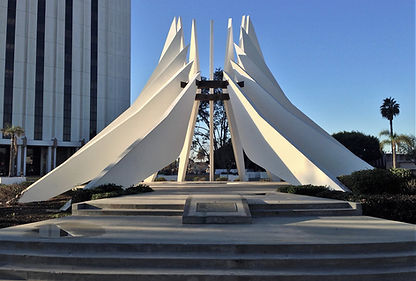
Community Overview: City of Compton, California

Contextual Summary on Community Needs, Informal Supports, and Partnership Dynamics
Introduction
The City of Compton, located in South Los Angeles County, is a historically significant urban community with deep cultural roots and strong civic identity. Like many historically disinvested urban areas in Southern California, Compton faces layered socioeconomic challenges shaped by housing pressures, income disparities, environmental burdens, and regional economic shifts. At the same time, the city maintains resilient informal support systems, strong faith and civic networks, and trusted public gathering spaces that function as stabilizing anchors.

This summary provides a brief overview of urgent needs, overlooked supports, underserved populations, and characteristics of effective partnership within the community.
Most Urgent Needs
Several needs consistently emerge as high priority:
Housing Stability and Affordability
Rising regional housing costs place pressure on low- and moderate-income households. Rent burden, overcrowding, and housing instability contribute to broader family stress and economic vulnerability.
Economic Opportunity and Poverty Reduction
A significant share of households face income constraints. Economic strain often manifests in stacked needs—food insecurity, childcare gaps, transportation barriers, and limited access to preventive healthcare.
Food Security and Basic Needs Access
Food distribution networks and assistance programs remain essential supports for many residents, indicating persistent household-level economic strain.
Environmental and Public Health Stressors
Like many environmental justice communities in Los Angeles County, portions of Compton experience cumulative burdens such as air quality concerns, urban heat exposure, and limited tree canopy coverage.
Informal and Often Overlooked Supports
While formal service systems exist, several informal supports play a critical stabilizing role:
Faith-Based Networks
Churches and faith communities frequently provide food distribution, counseling, informal referrals, and mutual aid beyond what is formally documented.
Educational Anchors
Local institutions such as Compton College serve not only students but often function as broader community resource hubs, including food access programs and basic-needs assistance.
Neighborhood Mutual Aid
Informal systems—childcare exchanges, ride sharing, job leads, family networks—often serve as first-response safety nets before formal assistance is sought.
These informal systems are frequently underrepresented in formal needs assessments but remain central to community resilience.
Underserved or Overlooked Populations
Several groups may experience disproportionate vulnerability:
Low-income households experiencing rent burden or overcrowding
Housing-unstable individuals and families (including those doubled-up rather than visibly unhoused)
Youth in socioeconomically disadvantaged school communities
Residents in environmentally burdened neighborhoods
These populations often face compounding stressors rather than single-issue challenges.
Where People Naturally Gather
Community life in Compton is structured around trusted public anchors:
Dollarhide Community Center
A primary hub for community events, conferences, educational classes, youth programs, celebratory gatherings, and Parks & Recreation programming. It functions as a multi-generational civic anchor.
Wilson Park
Athletic leagues, recreation programs, and public events create consistent intergenerational engagement.
Compton Library
A trusted educational and digital-access hub offering workshops, youth programs, and community events.
Transit Corridors and Civic Center Area
High foot traffic near transit hubs and the civic core creates natural points of contact for outreach and engagement.
What Good Partnership Looks Like in Compton
Effective collaboration in Compton is characterized by:
1. Place-Based Delivery Through Trusted Anchors
Partnerships succeed when services are delivered in spaces residents already trust and frequent—particularly at hubs such as Dollarhide Community Center, parks, schools, and libraries.
2. Cross-Sector Coordination
Strong initiatives align city departments, educational institutions, faith groups, nonprofits, healthcare providers, and business leaders around shared objectives rather than isolated programming.
3. Warm Handoffs and Integrated Navigation
Effective support includes direct introductions and coordinated referrals, reducing bureaucratic friction for families seeking assistance.
4. Shared Outcomes and Measurable Goals
Partnerships function best when aligned around clear targets such as housing stability, youth engagement, preventive health access, or workforce placement.
5. Community-Informed Design
Listening sessions, public forums, and resident engagement—often hosted at community hubs—ensure programs reflect lived realities rather than top-down assumptions.
What Types of Support Would Make a Meaningful Difference
Based on observable community dynamics, the following approaches would likely yield measurable impact:
Housing stabilization and eviction prevention support
Accessible benefits enrollment assistance (CalFresh, Medi-Cal, WIC)
Workforce pipelines tied to local employers and training programs
On-site preventive health screenings and environmental resilience programming
Coordinated service days hosted at trusted gathering spaces
Integrated, low-barrier services delivered in familiar community environments tend to outperform fragmented, referral-only models.
Conclusion
Compton is a community shaped by both structural challenges and strong civic resilience. Urgent needs center on housing stability, economic mobility, food access, and environmental health. At the same time, informal supports—faith networks, educational anchors, and neighborhood mutual aid—serve as critical yet often under-recognized assets.
Successful partnership in Compton depends less on introducing entirely new systems and more on strengthening coordination, reducing access friction, and leveraging trusted gathering spaces such as the Dollarhide Community Center and other established civic anchors.


Comments